
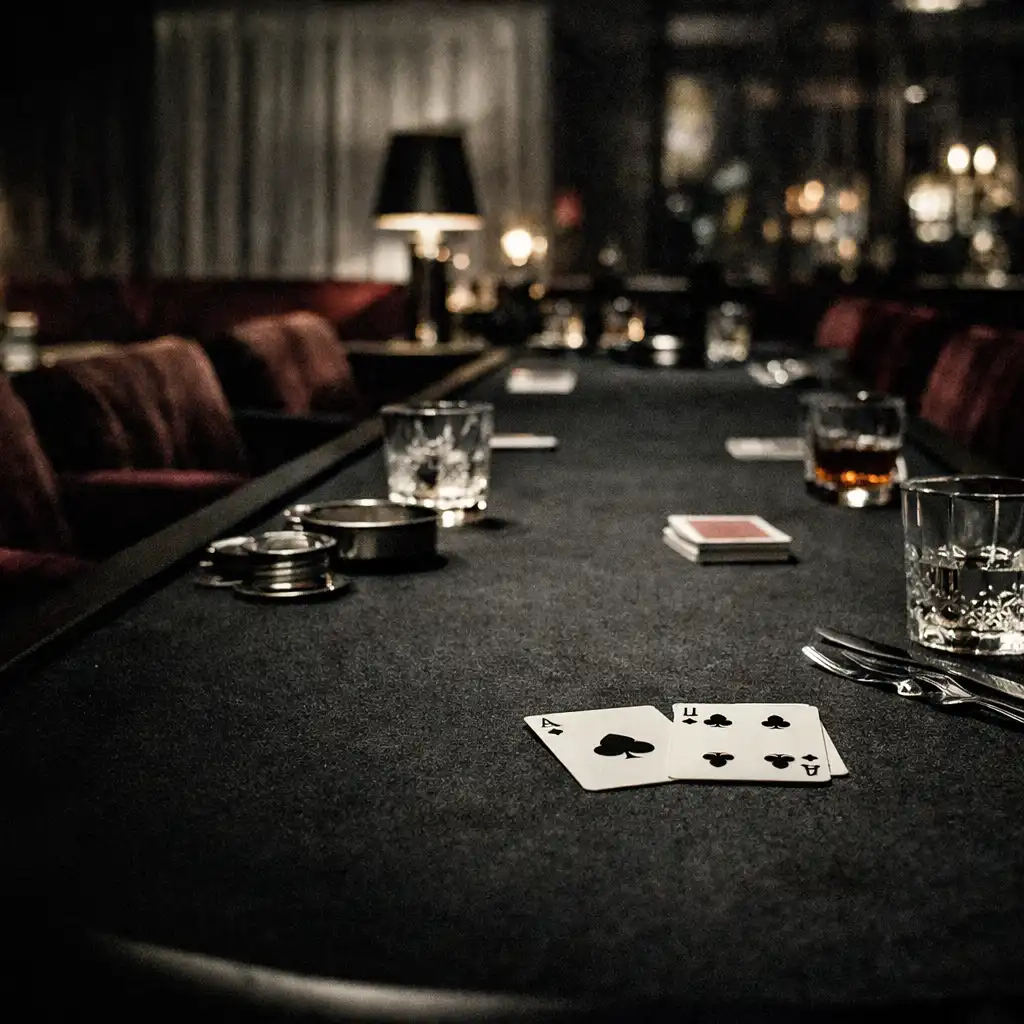
A dark felt card table and velvet seating in the late-night Slate and Onyx lounge

Card Lounge / Physical tables

Dinner slows into cards, conversation and the quiet charge of the room.

Beyond Slate & Onyx’s nocturnal dining room, the Card Lounge gathers low light, tactile settings and measured service into a more private after-hours rhythm. Cards sit naturally beside conversation rather than taking over the evening. Poker evenings can be joined, watched or simply felt from a nearby seat; there is room for guests who come for the table and those who prefer its atmosphere.

Enter the room

A threshold of felt, velvet and silver light, held after dinner.

The evening, continued

A room after dinner

The lounge does not interrupt the restaurant; it gives the later hours another register.

01

From table to lounge

Late dining at Slate & Onyx can resolve into a slower room without changing the standard of care. Guests may settle after a meal, carry a conversation onward or take a little distance from the dining room’s cadence. The Card Lounge is a continuation rather than a separate spectacle: linens remain neat, light stays low and service retains the same considered attention. There is no prescribed route through the night, only an invitation to let its pace become more conversational.
02

The social centre

At its centre, the room gives people something shared to notice. Physical cards, a felt surface and the pauses between turns create an easy focus for conversation, observation and poker. A guest need not dominate a table to belong to its atmosphere. Some sit close and follow each exchange; others talk at the edges, watching the room settle around a common point of attention. The feeling is inclusive, attentive and deliberately unhurried.

03

Service in the quieter hours

As the night deepens, small acts of hospitality keep the room composed: clear surfaces, a refreshed setting and enough space between voices for a thought to land. Silverware catches the light, velvet absorbs it and tables are kept ready for whatever conversation asks of them. The later portion of an evening is treated with discretion, allowing guests to remain present with one another instead of feeling hurried toward an ending.

Offline poker here is an in-person ritual: people at one table, listening to the room as carefully as they watch the cards.
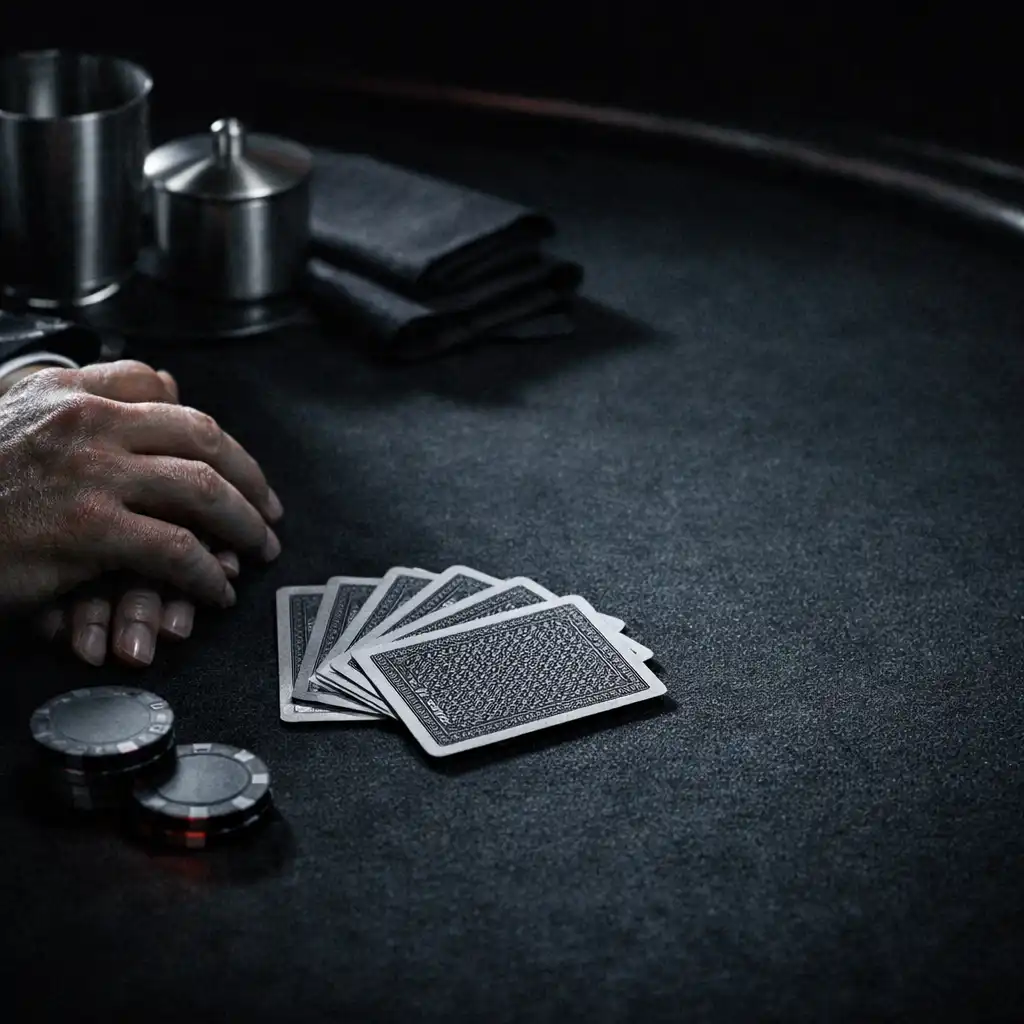
Hands resting beside physical cards, silver serviceware and dark felt on a poker table

Material studies

Built for the table

Our poker tables are gathering points within a dining-led room: tactile enough to invite a hand to rest, generous enough to keep conversation in view. Dark felt gives cards a clear place, while considered lighting catches the table’s edge rather than claiming the room. Every detail supports an evening that feels physical, calm and shared.

Light held low

Controlled light settles on faces, cards and glassware, with cool silver highlights held against deep shadow. It helps attention gather gently, leaving the room intimate without turning it into a spectacle.

Tactile signals

Cards, a neat surface, glassware and plain physical chips appear as quiet table details. Felt, linen and brushed silver make each gesture legible while preserving the hospitality of the setting.

Space between voices

Seating and shadow leave room for a table to breathe. In the Card Lounge, participation and watching can sit comfortably beside one another, without either asking more of the night.

At the physical table

Offline formats, plainly held

Offline poker at the lounge is shaped around physical tables, shared attention and respectful pacing. These notes are an introduction to the room, not an exhaustive rulebook. They offer a simple way to understand the kinds of social card sessions that may form part of an evening, with the host’s guidance always setting the immediate tone.

01

Texas Hold’em

Texas Hold’em is a familiar communal format in which attention moves around a shared table and each hand unfolds in view of the group. In this setting, the emphasis is on presence: following turns, noticing the physical cards and allowing the table its natural pauses. Guests who are curious can begin with the room’s courtesy guidance, then look to the host for a gentle orientation.

Read table etiquette
02

Open-table rounds

Open-table rounds describe a flexible social rhythm where presence, turns and reading the room matter more than speed. The poker tables remain a shared point of focus, while the host offers guidance that keeps each moment clear and considerate. Guests can follow along at their own pace and let the room’s cadence lead.

03

Hosted poker evenings

Hosted poker evenings are social gatherings built around a clear welcome, a prepared physical table and shared etiquette. The host helps establish the room’s pace and courtesy, so the table can remain relaxed for both familiar faces and newcomers. Conversation is part of the format, as is knowing when to leave space for attention.

New to the table

Familiarity is not assumed. Attentive observation, a simple question and a little time to read the room are all welcome ways to begin. You can read the etiquette before taking a seat.

Shared attention

The courtesy of the felt

+

Give the table your attention

When seated, staying present is a simple courtesy. Follow the host’s cues, let each turn have its own space and allow the physical nature of offline poker to set a calm pace. Attention does not need to feel severe; it is the quiet gesture that helps everyone see, listen and remain comfortable at the table.

+

Keep conversation generous

Conversation belongs in the room when it includes the table rather than overtaking it. Leave room for quiet concentration, respectful pauses and guests who are observing as closely as those participating. On poker evenings, a generous tone makes the atmosphere easier to enter and more pleasant to share.

+

Let the cards remain clear

Physical cards, personal items and table details are easiest to follow when their place remains orderly. Keeping the surface clear allows every guest to read the shared moment without distraction. If plain chips are present, they remain simply part of the physical table setting, alongside felt, glassware and the cards themselves.

+

Ask before assuming

Newcomers curious about Texas Hold’em or other offline poker formats are welcome to ask for a gentle orientation from the host. Experienced guests can help by making room for that learning. A thoughtful question is often the quickest way to feel at ease, and it keeps the table’s shared rhythm clear for everyone.

The room is defined by mutual attention, not performance: a table becomes welcoming when every guest has space to be present.

Card Lounge archive

Portraits of the room

These frames are glimpses rather than a complete record: light at the threshold, a gesture at the table and the late-night character of the Card Lounge held in shadow.

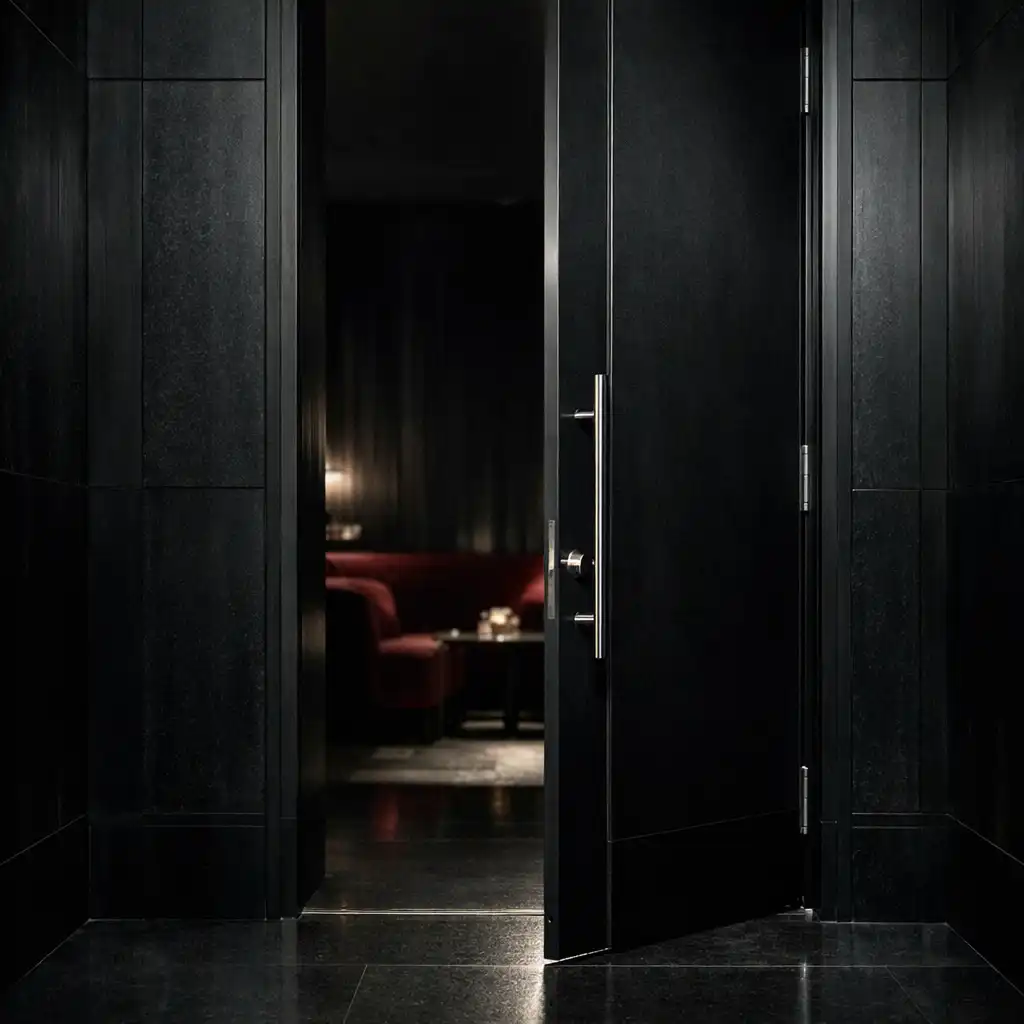
ThresholdA quieter room begins beyond the dining room, where silver hardware catches a final trace of light.
Hands at restPhysical cards and hands hold a pause between turns, with conversation close by.
Last lightSilver reflections settle into wine-dark shadow across the room after late dining.

Private occasions

For private evenings

The Card Lounge offers a composed setting for private evenings that value late dining, conversation and a table ritual with real presence. It is a place for gatherings that want an after-hours centre of gravity without losing the ease of a restaurant evening: dark surfaces, attentive pacing and the shared focus of a physical room.

01

A table with a centre

A physical table can give a gathering something to gather around while leaving ample room for dining and conversation. Poker tables offer a social focal point, never an obligation.

02

A host-led rhythm

A clear welcome and an attentive pace help a private poker evening find its own tone. The room is guided with courtesy, allowing guests to settle naturally together.

03

Space for the night

Low light, thoughtful settings and a quieter register make space for a gathering to linger in its own conversation after dinner.

Plan a private evening

Share the character of the evening you have in mind, and continue the conversation with Slate & Onyx.

Practical notes

Questions held at the door

A few practical answers for guests considering a late visit to the Card Lounge. Fuller restaurant and visit questions are available on the dedicated FAQ page.

Yes. The Card Lounge is an in-person room at Slate & Onyx, shaped around dining, conversation and physical card tables. Its atmosphere is part of the restaurant’s later hours: low light, tactile settings and attentive hosting create a place to sit close to the table or simply take in the room.

No familiarity is assumed. You are welcome to take in the atmosphere, observe a respectful table rhythm or ask the host for a simple orientation. Poker is only one part of the room’s social language, and a little attentive watching can be a comfortable way to begin. Read the etiquette guidance for the room’s shared courtesies.

Texas Hold’em is one recognizable shared-table format, where attention rests on turns, physical cards and table courtesy. Here, the social rhythm matters as much as understanding the format itself. The host can orient guests to the room’s approach, while the table’s measured pace makes it easier to follow the group without needing a technical introduction.

Offline poker means people gathered at physical poker tables, sharing an in-room experience rather than using a digital platform. It is tactile and social: cards are handled at the table, conversation moves through the room and the host’s guidance helps preserve a clear, welcoming rhythm for everyone nearby.

You can enquire about a private evening shaped by late dining, conversation and the Card Lounge setting. Begin by sharing the character of the gathering you have in mind through the contact page. The team can continue the conversation from there, with the room’s composed, hospitality-led atmosphere as the starting point.

Read all questions

Explore the broader FAQ collection for restaurant and visit context.

After midnight

The Card Lounge is Slate & Onyx after dining’s afterglow: an in-person room for conversation, considered cards and the calm attention that lets a late night hold its shape.